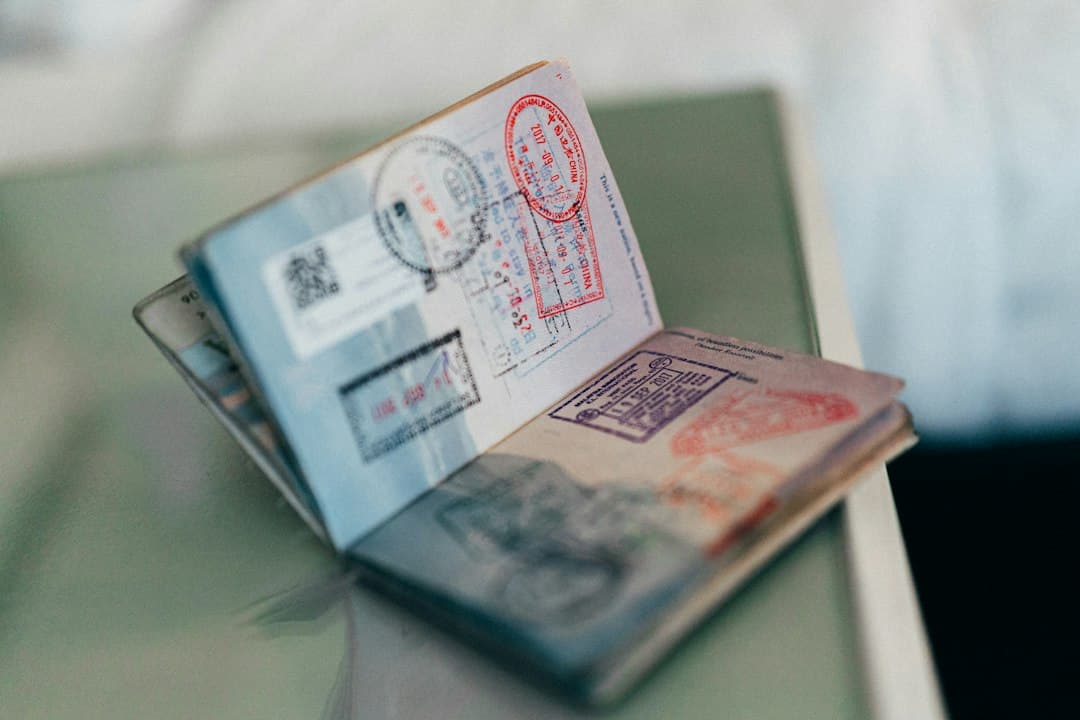
Student residence permit in France: validate your VLS-TS within 3 months, renew on ANEF 4 to 2 months before expiry, and work up to 964 hours a year.
If you are not a national of the EU, the EEA or Switzerland, your right to stay in France as a student rests on one document: first your long-stay visa equivalent to a residence permit (VLS-TS), which you must validate online within 3 months of arrival, then a student residence permit that you renew on the ANEF platform, at the earliest 4 months and at the latest 2 months before it expires (service-public.gouv.fr). That permit lets you work up to 964 hours a year without a separate work authorisation (service-public.gouv.fr). Here, in the order you will meet them, are the four moments when your residence permit is at stake: arrival, renewal, work, and after graduation.
Does this apply to you? EU Erasmus, non-EU Erasmus, international student
First, a quick sort, because many Studroof readers have nothing to do here:
| Your situation | Residence permit? |
|---|---|
| EU, EEA (Iceland, Norway, Liechtenstein) or Swiss national, on Erasmus or on a full degree | No. A valid ID card or passport is enough, whatever the length of stay. |
| Non-European, study stay of under 90 days | Short-stay visa (or visa exemption depending on nationality). No residence permit. |
| Non-European, one-semester or one-year exchange (4 to 12 months) | A long-stay visa. Depending on what the consulate issued: a VLS-TS (to be validated online) or a VLS-T "temporary" visa (no validation, but not renewable and no path to a residence card). Check the wording printed on your visa sticker. |
| Non-European, full degree longer than one year | VLS-TS for the first year, then a student residence permit for the following years. |
The VLS-TS is "valid for 4 to 12 months" and counts as a residence permit for as long as it is valid (service-public.gouv.fr). In other words, during your first year in France your visa is your residence permit, on one condition: that you validated it.
Step 1: validate your VLS-TS within 3 months
This is the most common and most expensive mistake of the first weeks. An unvalidated VLS-TS is a visa that was never activated: the first time you leave the country you cannot come back without applying for a new visa, and every later step (renewal, change of status) starts from an irregular footing.
The official rule leaves no room for doubt: "within 3 months of your arrival in France, you must validate your VLS-TS" (service-public.gouv.fr). Validation is done entirely online, on the platform of the Administration numérique pour les étrangers en France (ANEF), and involves paying a tax on top of the visa fees already paid at the consulate. The amount is set by the State and can change: check it on the official page when you pay rather than on a forum.
What you need to validate:
- Your passport with the visa sticker (visa number, dates, wording).
- Your date of entry into France (the stamp or your ticket).
- An address in France: your accommodation, even a temporary one. This is why it pays to have sorted your student housing in Bordeaux before you leave.
- An email address you actually read: the validation confirmation arrives there.
- A bank card for the tax (a French account is not required at this stage, but you will need one soon after: read opening a bank account as an international student).
Once validated, download and keep the validation confirmation: it is what proves your permit is active, for the CAF, social security or an employer.
Step 2: renew your student residence permit on ANEF
If you stay longer than your VLS-TS is valid, you move on to the student residence permit. The application is filed online, on ANEF, "at the earliest 4 months and at the latest 2 months before the end of validity of your residence document" (service-public.gouv.fr). As soon as you file, you receive "a dematerialised certificate of filing" proving that your application is in progress (service-public.gouv.fr).
What the prefecture expects from you, in substance:
- Proof that you are genuinely studying: enrolment certificate for the coming year, and results for the year just finished. A renewal can be refused if you cannot show the "real and serious" nature of your studies: repeated failed years without explanation, absences, changes of programme with no logic.
- Sufficient resources: scholarship, guarantor, bank statements, student job contract. The required level is set by the State; the official page and France-Visas give the current amount.
- Health insurance: your affiliation to French social security, obtained on arrival (social security and health insurance for international students).
- Proof of address less than 3 months old (rent receipt, hosting certificate, utility bill).
- A tax and a stamp duty paid online with tax stamps. The amount depends on the permit: check it on the official page of your application.
In Bordeaux, the Gironde prefecture no longer takes these applications at the counter: everything goes through ANEF. Each Bordeaux university has an international student welcome service; ask them for their back-to-school office hours, they often help put the file together. Remember the CVEC too: its certificate is one of the documents your university requires at enrolment, and enrolment is the basis of your renewal (CVEC in Bordeaux: amount and certificate).
One last point forums forget: after your first year, the student residence permit can be multi-year if your programme justifies it. The prefecture sets its length according to the course you follow; ask for a card covering the remaining length of your degree, with supporting documents.
Step 3: working with a student residence permit
Good news: your student residence permit is itself a work authorisation, within a precise limit. "The student may work a maximum of 964 hours per year (60% of the legal annual working time) without applying for a work authorisation" (service-public.gouv.fr). That is the "authorised to work on an ancillary basis" wording you will see on your permit.
Three rules to know before signing a student job in Bordeaux:
| Rule | What it means for you |
|---|---|
| 964 hours a year | Roughly 18 hours a week over the year, or full time during the holidays if you do not work the rest of the year. The counter runs over the validity year of your permit. |
| Employer declaration | "Hiring can only take place after a nominative declaration by the employer to the prefecture", at least 2 working days beforehand (service-public.gouv.fr). It is not yours to file, but make sure it is done. |
| Going over the limit | "If they fail to respect this limit, they risk withdrawal and refusal of renewal of their residence permit" (service-public.gouv.fr). The risk is real: the prefecture has access to social declarations. |
Special case of Algerian students: the Franco-Algerian agreement applies instead of ordinary law. The employer "must apply for and obtain a work authorisation before the activity can begin", and the ceiling is "at most 50% of the annual working time practised in the branch or profession concerned" (service-public.gouv.fr).
An apprenticeship or professional-training contract follows the same conditions, with a requirement of more than one year of presence in France (service-public.gouv.fr).
Step 4: after graduation, the "job search or business creation" card
If you obtain in France a degree at least equivalent to a master's (or a licence professionnelle, a Mastère Spécialisé, a Master of Science), you can apply for a "job search or business creation" residence card. It "is valid for 1 year", "renewal is not possible", and it "allows you to work as an employee", the employer being "exempt from applying for a work authorisation" (service-public.gouv.fr). Its cost is €150 (€50 stamp duty plus a €100 tax) according to the same official page. It "does not concern Algerian students", who fall under the bilateral agreement.
It is the bridge between student status and an employee or entrepreneur permit: you get one year, full time, to find a job related to your studies or launch your project. Apply before your student card expires, on the same principle as a renewal.
The mistakes that cost the most
- Missing the 3-month VLS-TS validation window: the most serious, and the easiest to avoid. Set a reminder the day you arrive.
- Filing the renewal too late: past the expiry date without a filing, you are in an irregular situation until it is regularised, with an extra cost.
- Moving without updating your address: the prefecture and ANEF communicate by post and by email; a dead address means a missed appointment or an uncollected card.
- Exceeding 964 hours because an employer offered "just a few more hours": it is your permit at stake, not theirs.
- Paying an intermediary to "speed up" ANEF: the platform is free apart from the official taxes, and nobody speeds up a prefecture.
The residence permit is the first brick; the next ones follow in a precise order (social security, bank, CAF, transport). To forget nothing, follow our Bordeaux settling-in guide.
FAQ — Student residence permit in France
I am on Erasmus from an EU country: do I need a residence permit? No. Nationals of the EU, the EEA and Switzerland need no residence permit to study in France, whatever the length of stay. A valid ID document is enough.
How long do I have to validate my VLS-TS? 3 months from your arrival in France, online on the ANEF platform (service-public.gouv.fr). After that, your visa is no longer considered a valid residence permit.
When should I file my student residence permit renewal? At the earliest 4 months and at the latest 2 months before the end of validity of your residence document, online on ANEF (service-public.gouv.fr). You immediately receive a certificate of filing.
How many hours can I work with a student residence permit? 964 hours a year, i.e. 60% of the legal annual working time, without a work authorisation (service-public.gouv.fr). Algerian students fall under a separate regime (work authorisation and a 50% ceiling).
Where do I apply in Bordeaux? Online on ANEF, whichever prefecture covers you. The Gironde prefecture does not handle these applications at the counter; your university's international welcome service can help you prepare the file.
What happens to my permit after graduation? With a master's-level degree obtained in France, you can apply for the "job search or business creation" card, valid for 1 year, non-renewable, which lets you work full time (service-public.gouv.fr).
Residence permit sorted, the rest of your move follows: check your entitlement to APL as an international student (the rules changed on 1 July 2026), register with social security, and prepare your rental application file as an international student. For the housing itself, find student housing in Bordeaux on Studroof, and browse our student services for the remaining steps.
This article is informational and does not replace official sources. Deadlines, amounts and conditions of stay change: always check your situation on service-public.gouv.fr and on the ANEF platform. Last updated: September 2026.