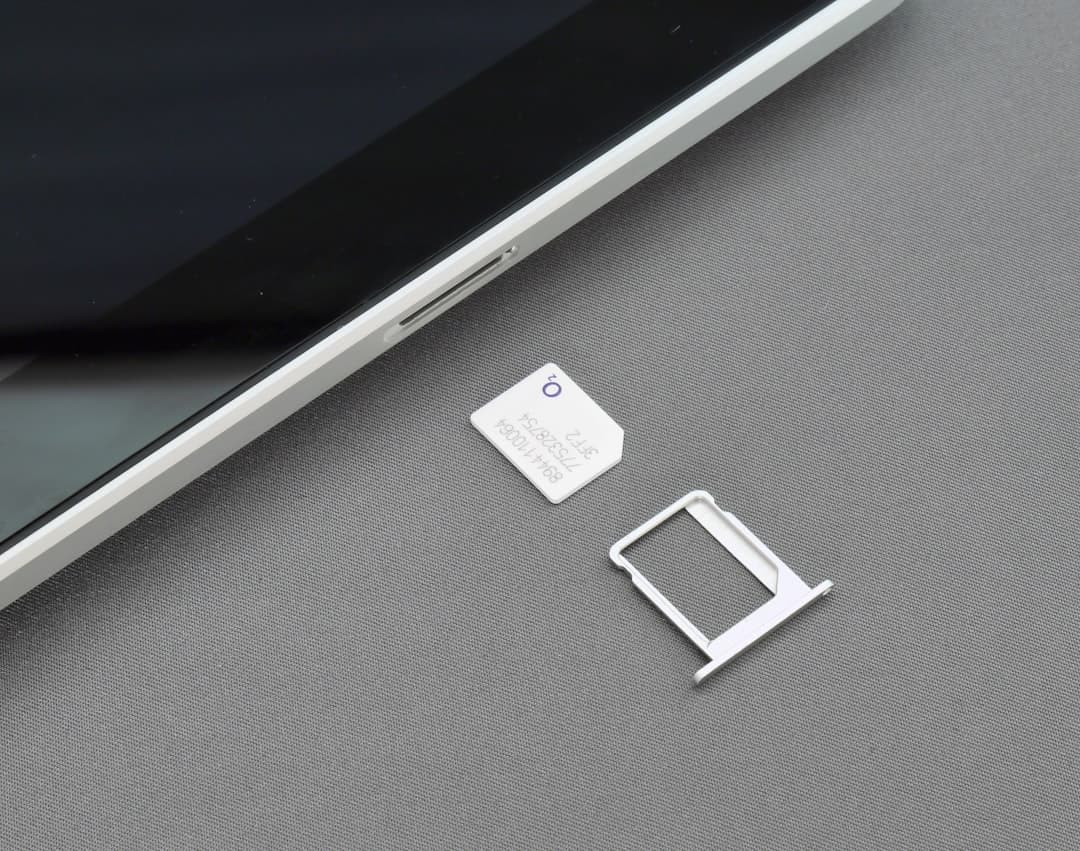
SIM card international student France: why a French number is essential, no-contract vs prepaid vs eSIM, and what you need to sign up.
As soon as you land, get a French SIM card so you have a French phone number: it's what unlocks everything else — two-factor authentication (2FA), opening a bank account, your admin tasks, and getting a call back from a landlord. You've got three options: a no-contract plan (forfait sans engagement — cancel any time), a prepaid SIM (carte prépayée), or an eSIM (a digital SIM, no physical card). This guide explains why a French number is non-negotiable, how to choose, and what you need to sign up as an international student in France.
Why a French number is essential
You can technically keep your home number on roaming, but you'll hit walls fast. A French number opens doors that your original number keeps shut:
- Two-factor authentication (2FA): banks, the tax office, government portals and many services text a code to a French number. Without one, you're stuck at the door.
- Opening a bank account: most banks ask for a French mobile number. We walk through the steps in the guide on opening a French student bank account.
- Admin and appointments: housing, the préfecture (local government office), university, healthcare… people call and text you on a French number.
- Cost and convenience: a local plan is almost always cheaper than roaming, with plenty of data to browse, call and use your apps.
No-contract plan, prepaid or eSIM: which one?
The three options suit different needs. Here's how to tell them apart.
| Option | Best for | Upside | Good to know |
|---|---|---|---|
| No-contract plan (forfait sans engagement) | Long stay (a semester, a year) | Cancel any time, lots of data, usually the best value | Generally needs a RIB (French bank details) for the monthly direct debit |
| Prepaid SIM (carte prépayée) | Immediate arrival, short stay, stop-gap | No commitment, no bank account required, top up when you like | Often less data for the money; you top up manually |
| eSIM | Compatible phone, instant activation | Activates online with no physical card, ideal the moment you land | Check your phone supports eSIM; availability varies by provider |
A practical tip: many students arrive with an eSIM or a prepaid SIM so they're reachable straight away (right from the airport), then switch to a no-contract plan once their bank account is open. That combination is the most flexible.
What you need to sign up
The documents asked for vary by option and provider, but here's the general logic:
- Proof of identity (passport or ID card).
- A means of payment: for a plan with a monthly direct debit, you'll usually need a French RIB — so an open bank account. Prepaid and some eSIMs are pay-as-you-go and need fewer documents.
- A French address is sometimes required for a standard plan.
This is the classic newcomer's chicken-and-egg: a "standard" plan often needs a bank account, and the bank account often needs a mobile number. The way out: start with a prepaid SIM or an eSIM (few requirements), get your French number, open your bank account, then move to a no-contract plan if you want more data.
Where to sign up and how much it costs
France's main mobile providers offer plans for every budget, including low-cost deals with plenty of data. We won't give you a fixed price here: rates, promotions and data allowances change constantly, and a "student" deal this month may be gone the next. Compare directly with the providers and their low-cost brands when you're ready to sign up.
Where to look:
- The four network operators — Orange, SFR, Bouygues Telecom and Free — and their low-cost brands (Sosh, RED by SFR, B&You, etc.): official sites, comparison tools, and shops in the city centre or shopping malls.
- "No-commitment" deals (sans engagement): favour these if you're only here for a semester or a year.
- Travel / data eSIMs: handy to cover your first few days before you settle on a longer-term plan.
A tip to avoid nasty surprises: check the data allowance, whether calls and texts abroad are included (useful for calling family), and above all that the plan really is no-contract if that's what you want. Be wary of tempting offers outside official channels — our anti-scam tips apply to mobile plans too.
Two official references worth knowing. ARCEP, France's telecom regulator, publishes data on mobile network quality and coverage and lets you report a dispute with a provider. And before you sign, check the rules on ending and committing to a mobile contract on service-public.gouv.fr (France's official public-service portal): a "no-commitment" (sans engagement) plan can be cancelled any time, whereas a 12- or 24-month commitment means fees if you leave early.
FAQ — SIM card and mobile plan for international students
Do I really need a French number as an international student? Yes, in practice. Two-factor authentication by text, opening a bank account and much of the admin all rely on a French number. Keeping only your home number on roaming will block you quickly and cost a lot.
No-contract plan or prepaid SIM: which should I pick? For a long stay, a no-contract plan offers more data and better value, but often needs a RIB. For an immediate arrival or a short stay, a prepaid SIM or eSIM is simpler and needs fewer documents.
Do I need a bank account to get a mobile plan? For a plan with a monthly direct debit, usually yes: you need a French RIB. Prepaid and some eSIMs are paid without a direct debit, letting you get a number before your account is even open.
Do eSIMs work in France? Yes, if your phone supports eSIM. It activates online with no physical card, which is ideal for being reachable the moment you land. Check your model's compatibility and the provider's offer.
How much does a mobile plan cost in France for a student? Rates vary and change often, with very affordable low-cost deals. We don't fix a price here: compare directly with the providers and their low-cost brands when you sign up.
Getting a French number is one of the first building blocks of settling in, right alongside opening a bank account and finding accommodation. Remember to sort out healthcare too and to manage your student budget. Find every step in the Studroof guide and the student services. And to land in the right place: find your student accommodation in Bordeaux on Studroof.
This article is informational. Mobile providers' offers, prices and data allowances change constantly: always compare current terms directly with the providers before signing up. Last updated: July 2026.